Which Premier League or Football League stadium is closest to the Buckingham Palace?
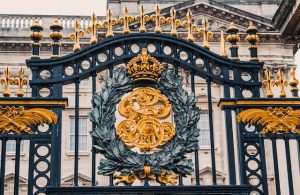
King Charles is reportedly a fan of Burnley Football Club, which is a pity, because the Clarets’ home ground, Turf Moor, is fully 200 miles from his formal residence, Buckingham Palace. At the time of writing, within the boundaries of Greater London there are 13 Premier League and Football League stadia, all of which are within 11 miles of Buckingham Palace, should His Majesty wish to switch allegiance at any point.

Closest of all to ‘Buck House’, at a distance of 3.0 miles – or just over a hour’s walk for a man of King Charles’ age – is Stamford Bridge, home of six-time Premier League champions Chelsea, on Fulham Road in the SW6 postcode district. Other nearby Premier League options are Craven Cottage, home of Fulham, at a distance of 4.4 miles and the Emirates Stadium, home of Arsenal, which is only a few hundred yards further away – albeit to the north, rather than the south-west – at 4.6 miles.

The remaining four Premier League stadia in the capital, namely the London Stadium (West Ham United), the Gtech Community Stadium (Brentford), Selhurst Park (Crystal Palace) and the Tottenham Hotspur Stadium (er, Tottenham Hotspur) are all 6.7 miles, or further, away from Buckingham Palace. However, Championship football is available at The Den (Millwall) and the Loftus Road Stadium (Queens Park Rangers), which are just 4.6 miles and 4.7 miles away, respectively.

Moving down the English football pyramid, Cherry Red Records Stadium (AFC Wimbledon) is still only 6.1 miles away. A little further afield, Brisbane Road (Leyton Orient) at 8.1 miles, The Valley (Charlton Athletic) at 8.7 miles and the VBS Community Stadium, a.k.a. Gander Green (Sutton United) at 10.8 miles complete the baker’s dozen of Premier League or Football League stadia in the capital.

Which goalkeeper was nicknamed the ‘Black Spider’?

The short answer is the late Lev Ivanovich Yashin, who represented the Soviet Union at three World Cups, in 1958, 1962 and 1966 and was, arguably, the greatest custodian of all time. Indeed, such is his legacy that ever since the 1994 FIFA World Cup the best goalkeeper in the tournament has been presented with the Lev Yashin Award, in his honour.

Yashin earned his nickname because of his athleticism, instinctive reaction and, in particular, his trademark jersey, shorts and socks, which were actually a deep, dark navy or midnight blue colour, but easily mistaken for black. He is credited with revolutionising the art of goalkeeping, being the first of his kind to communicate effectively with the defenders in front of him to position them to maximum effect. The Ballon d’Or, awarded annually to the best footballer in the world, was established in 1956 and Yashin, who won it in 1963, remains the only goalkeeper ever to do so.

Born in Moscow on October 22, 1929, Yashin made his World Cup debut in Sweden in 1958, when the Soviet Union reached the quarter-finals, but were beaten 2-0 by the hosts. Nevertheless, one match per round was relayed across Europe by the European Broadcasting Union (EBU), bringing his performances to a wider, international audience. Four years later, in Chile, despite concussion and uncharacteristically poor form – which led Yashin to be written off in some quarters – the Soviet Union again reached the quarter-finals, where they were eliminated 2-1 by the hosts.

Yashin achieved his highest-placed World Cup finish in England in 1966, when the Soviet Union were beaten 2-1 by West Germany in the semi-finals at Goodison Park and again, by the scoreline, by Portugal in the third-place playoff at Wembley Stadium. The antithesis of a modern sports professional, he once quipped, ‘I like to have a smoke before a match to calm my nerves, then drink a strong drink to tone my muscles.’

The Most Beautiful Stadiums In The Premier League

The English Premier League is the top tier of the English football league system and has been around since 1992. It is considered the most competitive, entertaining and profitable league in world football. The Premier League was founded after a breakaway from The Football League, which was established in 1888.

With grandiose stadiums steeped in football history to immaculate pitches, where the lines drawn by the pitch line marker are perfect; the Premier League personifies class. Since the Premier League is one of the most-watched sports leagues in the world, organizations make considerable efforts to keep pitches in the best condition possible, both physically and visually.

Anfield

One of the most iconic venues in world football, Anfield Stadium, is the home of Liverpool Football Club. Located in the Anfield area of Liverpool, England, it has been the club’s home since its formation in 1892. It is renowned for its atmosphere and passionate supporters who create an electric atmosphere on match day. Anfield also houses some of the most famous stands in world football such as The Kop, which is known for the passionate singing and chanting from fans during matches. The stadium also features several other facilities including a museum, retail store, conference centre and hospitality suites.

Old Trafford

Known as the Theatre of Dreams, Old Trafford Stadium, located in Manchester, England, is the home of Manchester United Football Club. It is another spectacular stadium that has been a part of the English football for over a century. It has undergone several renovations over the years to keep up with modern standards. Old Trafford currently holds a capacity of 74,879 spectators and is renowned for its atmosphere on match days. The stadium has hosted some of the biggest matches in world football including UEFA Champions League finals, FA Cup finals and international fixtures. It also serves as a venue for concerts and other events throughout the year.

Stamford Bridge

Stamford Bridge is an especially beautiful football stadium, located in Fulham, London. It is the home of Chelsea Football Club. The stadium has a capacity of 41,631 and is one of the most famous in England. It was originally opened as an athletics track and hosted the FA Cup Final in 1920. In recent years, it has undergone many renovations to modernize its facilities and improve its matchday experience for fans. The stadium features a range of amenities including restaurants, bars, shops and even a museum dedicated to Chelsea FC’s history. When football matches are not being played at Stamford Bridge, the stadium hosts other events such as concerts and rugby matches.

5 Biggest Football Stadiums in the UK

Football is the most popular sport in the United Kingdom, with a rich history dating back over a century. The country boasts some of the biggest and most iconic football stadiums in the world. In this article, we will take a closer look at the biggest football stadiums in the UK, exploring their history and significance to the sport.

1. Wembley Stadium

Wembley Stadium is the largest football stadium in the UK, with a capacity of 90,000 seats. It is located in Wembley, London, and is home to the England national football team. The stadium has hosted many important football events, including the FA Cup Final, League Cup Final, and Community Shield. It has also hosted many concerts and other sporting events.
The original Wembley Stadium was built in 1923 and was often referred to as the “Twin Towers” due to its two large towers that could be seen from a distance. The stadium was rebuilt in 2007, and the new design includes a retractable roof that covers the entire stadium.

2. Old Trafford

Old Trafford is the second-largest football stadium in the UK, with a capacity of 75,797 seats. It is located in Manchester and is the home of Manchester United Football Club. The stadium has a rich history, having been built in 1910 and undergoing several renovations over the years.
Old Trafford has hosted many important football matches, including World Cup matches and UEFA Champions League finals. It has also hosted many other sporting events and concerts.

3. Tottenham Hotspur Stadium

With a 62,850 capacity, the home of Tottenham Hotspur the third-largest stadium in the UK. It’s a stadium that was built with the intention of being multi-purpose. It has a retractable pitch, for instance, which houses, underneath, a synthetic field for the NFL London Games hosted every year during the NFL’s regular season. Just recently, the club have signed a 15-year deal with F1 that will enable fans of F1 to visit the stadium to learn about the sport and see the production of an in-stadium electric karting track. The strategic partnership will help develop and identify the next wave of F1 drivers. As such, those who look for Tottenham e tickets shouldn’t simply expect to find that they can just go and see Harry Kane & co. live.

4. Celtic Park

Celtic Park is the fourth-largest football stadium in the UK, with a capacity of 60,411 seats. It is located in Glasgow and is the home of Celtic Football Club. The stadium is one of the most iconic in Scotland and has a rich history dating back to 1892 when it was first built.
Celtic Park has hosted many important football matches, including Scottish Cup Finals, Scottish League Cup Finals, and UEFA Champions League matches. It has also hosted many other sporting events and concerts.

5. Emirates Stadium

Emirates Stadium is the fifth-largest football stadium in the UK, with a capacity of 60,260 seats. It is located in London and is the home of Arsenal Football Club. The stadium was built in 2006 and is one of the most modern and luxurious football stadiums in the world.
Emirates Stadium has hosted many important football matches, including FA Cup Finals, League Cup Finals, and UEFA Champions League matches. It has also hosted many other sporting events and concerts.

Football stadiums play a significant role in the sport, providing a home for teams and a place for fans to come together and support their team. The UK has some of the biggest and most iconic football stadiums in the world, each with its own unique history and significance. From Wembley Stadium to Celtic Park, these stadiums have seen some of the most important football matches in history and will continue to play a central role in the sport for years to come.

1 5 6 7 8 9 21