Who holds the record for the longest throw ever in the men’s javelin?

The world record for the men’s javelin was first recognised by the International Association of Athletics Federations (IAAF) in 1912 and progressed, steadily, until 1980. However, on April 23 that year, Hungarian Ferenc Paragi threw 96.72 metres, beating the previous record, set by compatriot Miklós Németh four years earlier, by 2.14 metres. On May 15, 1983, American Tom Petranoff threw 99.72 metres, beating the existing world record by exactly 3.00 metres, but even that effort was eclipsed, just over a year later, by East German Uwe Hohn.

On July 20, 1984, at the Friedrich-Ludwig-Jahn-Stadion in what was, at the time, East Berlin, Hohn threw a prodigious 104.80 metres, shattering the previous world record by 5.08 metres. Hohn remains the only man ever to have throw a javelin beyond 100 metres. Two years later, the design of the javelin was changed, moving the centre of gravity forward, with result of shortening distances and increasing the likelihood of a ‘point-first’ landing. Consequently, all previous world records were rescinded.

Similarly, in 1991, the serrated tail, or Németh, model javelin was made illegal by the IAAF and the world record reverted to that set the previous year with a legal model. By way of comparison, the current world record for the men’s javelin is the 98.48 metres thrown by Czech legend Jan Železný on May 25, 1996.


Which athlete is the highest paid in the world?

Every year, the leading sports media rank the richest athletes of the year. However, the lists have not changed much over the past few years – the same athletes continue to be among the richest people not only in sports but also in the world. In this article, we will talk about which of the athletes is the record holder for earnings.


According to the sports publication Sportrico, when compiling the rating, open research was taken into account, as well as data from insiders and other media, including Forbes. The income of each athlete consists of several sources of income – salary, prize money, advertising contracts, royalties, license fees, and much more.


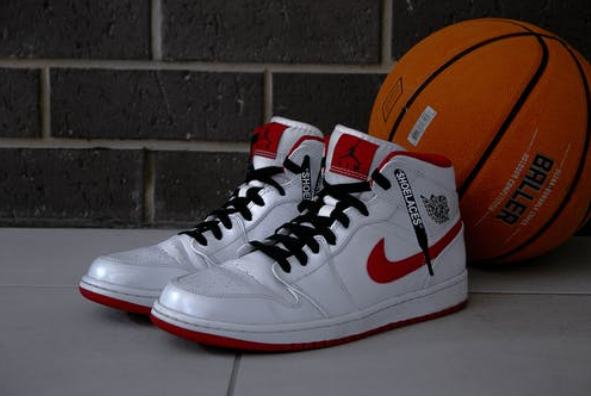
Basketball player Michael Jordan is the richest athlete in the world. His income is $2.62 billion. If you want to try to earn a lot of money like Jordan – you may try National casino NZ, which is very profitable nowadays.


He is a six-time NBA champion, five-time season MVP, and 14-time All-Star has earned $94 million in his career. The athlete receives the main income due to his attractiveness, charisma, and popularity.


Jordan for a whole decade became a living symbol of basketball and the embodiment of victory. He repeatedly became the advertising face of the most expensive brands, starred in commercials, and even participated in the filming of several films.


Michael Jordan is an athlete who revolutionized the NBA. However, in addition to sports, it has also changed the sports advertising market, as well as the relationship of NBA superstars with sporting goods manufacturers.


The fact is that before Jordan collaborated with advertising brands, the advertising market brought superstars very little income. In addition, there were racial barriers – only the black population sympathizes with black players, which has never been highly solvent. Only with the advent of Michael Jordan in the sport did the situation change. After the world’s leading brands began to invite him for advertising cooperation, this market has changed a lot. Athletes began to earn much more on advertising contracts.


Jordan’s income


The basketball player became the first billionaire athlete. According to Forbes, Michael Jordan is the highest-paid athlete in the history of modern sports.

According to unofficial information, Michael annually receives about $ 100 million from Nike, being the official face of the brand. In addition, Jordan continues to work with Hanes, Gatorade, and Upper Deck, receiving solid bonuses from participating in advertising.


How does he spend?

In addition to the income of the stars, it is always interesting to find out how they spend their millions. According to unofficial information, Michael has a personal jet aircraft, the tail number of which contains the number “23” – it was under this number that the athlete played. In addition, he spent $12.8 million building his home in Florida.

Jordan also invests in technology startups. He was one of several celebrities who have invested heavily in Silicon Valley-based Gigster, which connects companies with freelance software developers, designers, and project managers.

Who is Jarmila Kratochvilova?

Jarmila Kratochvilova is a retired Czech athlete, best known for setting a world record in the women’s 800 metres which, according to Svetlana Masterkova, gold medallist at the 1996 Summer Olympics, ‘will last for 100 years’. On July 26, 1983 at the Olympiastadion in Berlin, Kratochvilova clocked a time of 1:53.28, which has yet to be seriously challenged and has the distinction of being the longest-standing individual world record in athletics.

Indeed, at one point in her career, Kratochvilova held world records for both the women’s 800 metres and the women’s 400 metres, having run 47.99 seconds for the shorter event at the inaugural World Championships in Helsinki on August 10, 1983. That mark was beaten by her main rival, East German Marita Koch, who clocked 47.60 seconds at the IAAF World Cup in Canberra two years later. Nevertheless, in so doing, Koch set another record that has yet to be seriously challenged and she and Kratochvilova remain the only women in history to 400 metres in under 48 seconds.

Broad-shouldered, muscular and flat-chested, Kratochvilova was suspected of illegal drug use, not least because she emerged from obscurity, at the age of 32, to become a world-class middle distance runner. Secret documents, made public in 2006, revealed that Czech athletes were systematically administered illegal substances under Communism, but Kratochvilova has never been implicated.

Who is Zola Budd?

Zola Budd, or Zola Pieterse, as she is now known, is a South African long-distance runner who will probably always be best remembered for (i) running barefoot and (ii) colliding with arch rival American Mary Decker-Slaney in the final of the 3,000 metres at the Los Angeles Olympics in 1984. Sport was a key consideration for the country at the time, as who doesn’t want to suceed on the international stage? Nowadays, with a shift to the virtual we’re as likely to log into online casino south africa, as have a focus on sport. Earlier that year, Budd, 18, had completed 5,000 metres in an unratified time of 15:01.83 which, had it been allowed to stand, would have smashed the world record, 15:08.26, set by Decker-Slaney in 1982. Of course, it was not, due to South African athletes being banned from international competition during the apartheid era.

Indeed, Budd circumvented the ban by applying for British citizenship, on the grounds that her paternal grandfather was British, and thus, in the eyes of many people, finagled her way onto the British Olympic team. In any event, on August 10, 1984, Budd and Decker-Slaney lined up for their highly anticipated showdown over 3,000 metres at the Los Angeles Memorial Coliseum.

As expected, the early fractions were very fast, as Decker-Slaney made the running, with Budd at her shoulder. Shortly after halfway in the seven-and-a-half lap contest, Budd took a narrow lead but, having moved towards the kerb, she was caught, twice, by Decker-Slaney’s spikes. Decker-Slaney stumbled and fell spectacularly to the ground, injuring her hip in the process, and her race was over. Bleeding and tearful, Budd continued, but faded during the final lap to finish seventh behind eventual winner Romanian Maricica Puica. Sport, and indeed real money casino games can at times have topsy turvy results. Sometimes you’re down on your luck, other times you simply can’t put a foot wrong. It’s the way of the world really.

1 2 3 4 5 6 7